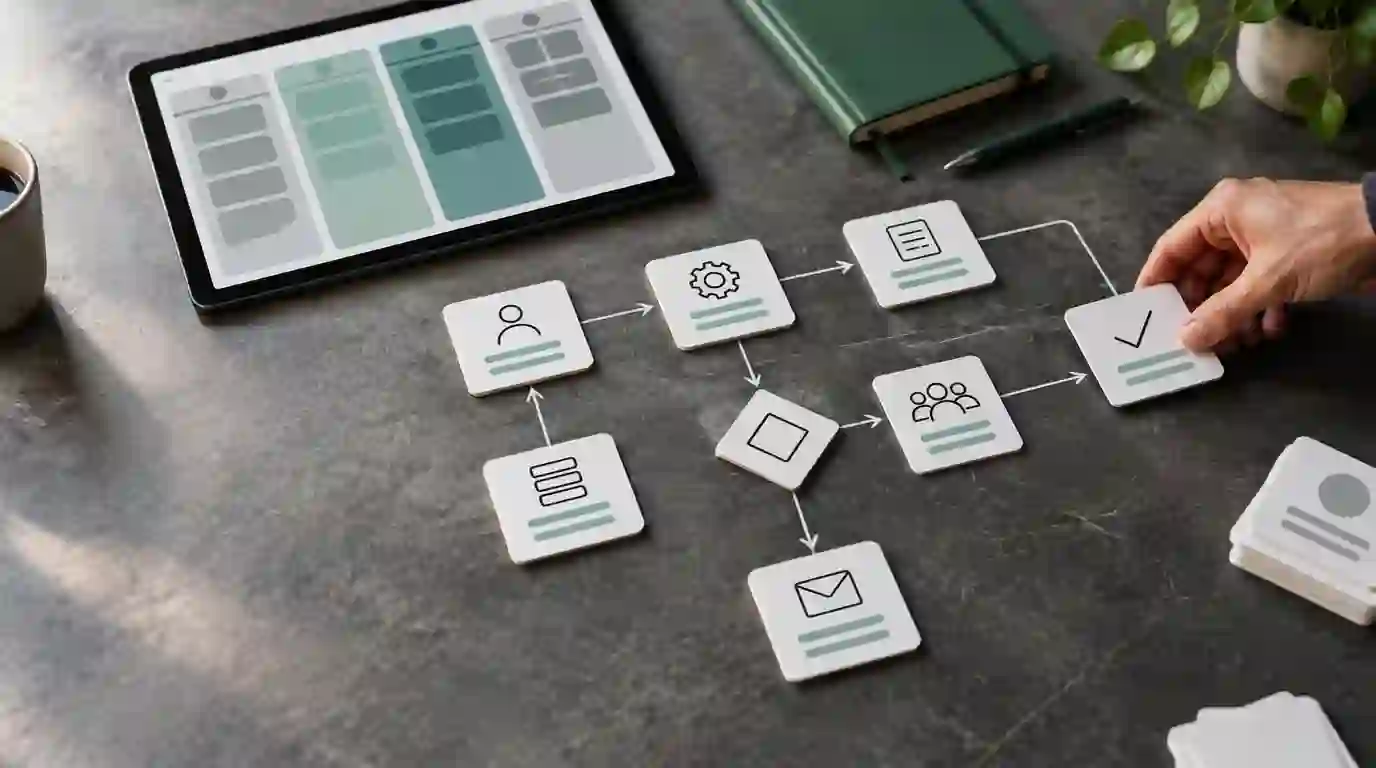
Turn Process Inefficiencies intoCompetitive Advantages
Our methodology-driven approach identifies waste, automates repetitive work, and creates scalable processes that grow with your organization.
4-Step Optimization Framework
A proven approach that delivers sustainable improvements through systematic analysis and implementation.
Current State Analysis
We begin by mapping your existing workflows, identifying bottlenecks, redundancies, and pain points. Through stakeholder interviews and data analysis, we build a complete picture of how work actually flows through your organization.
- Process flow documentation
- Bottleneck heat maps
- Stakeholder pain point analysis
- Baseline metrics establishment
Future State Design
Based on our analysis, we architect optimized processes that eliminate waste, automate repetitive tasks, and create clear accountability. We design for both immediate wins and long-term scalability.
- Optimized process blueprints
- Automation opportunity map
- Role & responsibility matrix
- Technology requirements
Implementation Planning
We develop a detailed rollout strategy that manages change effectively. This includes communication plans, training programs, and phased implementation to minimize disruption while maximizing adoption.
- Phased rollout timeline
- Change management plan
- Training curriculum
- Success metrics framework
Continuous Improvement
Optimization doesn't stop at go-live. We establish monitoring systems and feedback loops that enable ongoing refinement, ensuring your processes evolve with your business needs.
- Performance dashboards
- Feedback collection systems
- Quarterly review cadence
- Optimization roadmap
Industry Applications
Process optimization principles applied to your specific operational challenges.
Technology Project Intake
Streamline how technology requests are captured, prioritized, and resourced across your organization.
- IT service requests
- Development project proposals
- Infrastructure change management
Vendor Management Processes
Optimize vendor selection, onboarding, performance tracking, and relationship management.
- RFP/RFQ workflows
- Contract lifecycle management
- Vendor performance reviews
Compliance Workflows
Ensure regulatory adherence through systematic processes that document, track, and report compliance activities.
- Audit preparation
- Policy attestation
- Incident response procedures
Resource Allocation Systems
Improve how people, budget, and assets are allocated to maximize utilization and minimize waste.
- Capacity planning
- Budget allocation cycles
- Asset management workflows
ROI Calculator
Model potential released capacity from your assumptions
Illustrative planning estimate, not measured savings or ROI. Released time becomes cash savings only if actual costs fall; implementation costs, adoption, and review overhead are not included.
Loan Processing Workflow
Illustrative financial services scenario — not a client engagement
A manual loan workflow can create duplicate data entry, unclear handoffs, and limited visibility into request status.
An advisory review could evaluate structured intake, parallel review where appropriate, and shared status tracking. Scope and suitability depend on the organization's controls and requirements.
Ready to discuss your technology leadership needs?
Discuss your priorities, current challenges, and which advisory practices could support your next decisions.